The Swift Comparison Trap
The Swift Comparison Trap
Stadium Scale vs Conference Room Depth

I don’t want to watch it.
The Taylor Swift Eras Tour documentary sat in my queue like homework I was avoiding. Not because I don't appreciate Taylor Swift, I do. Not because I think she's overrated, she's not.
I don’t want to watch it because I know it will hurt.
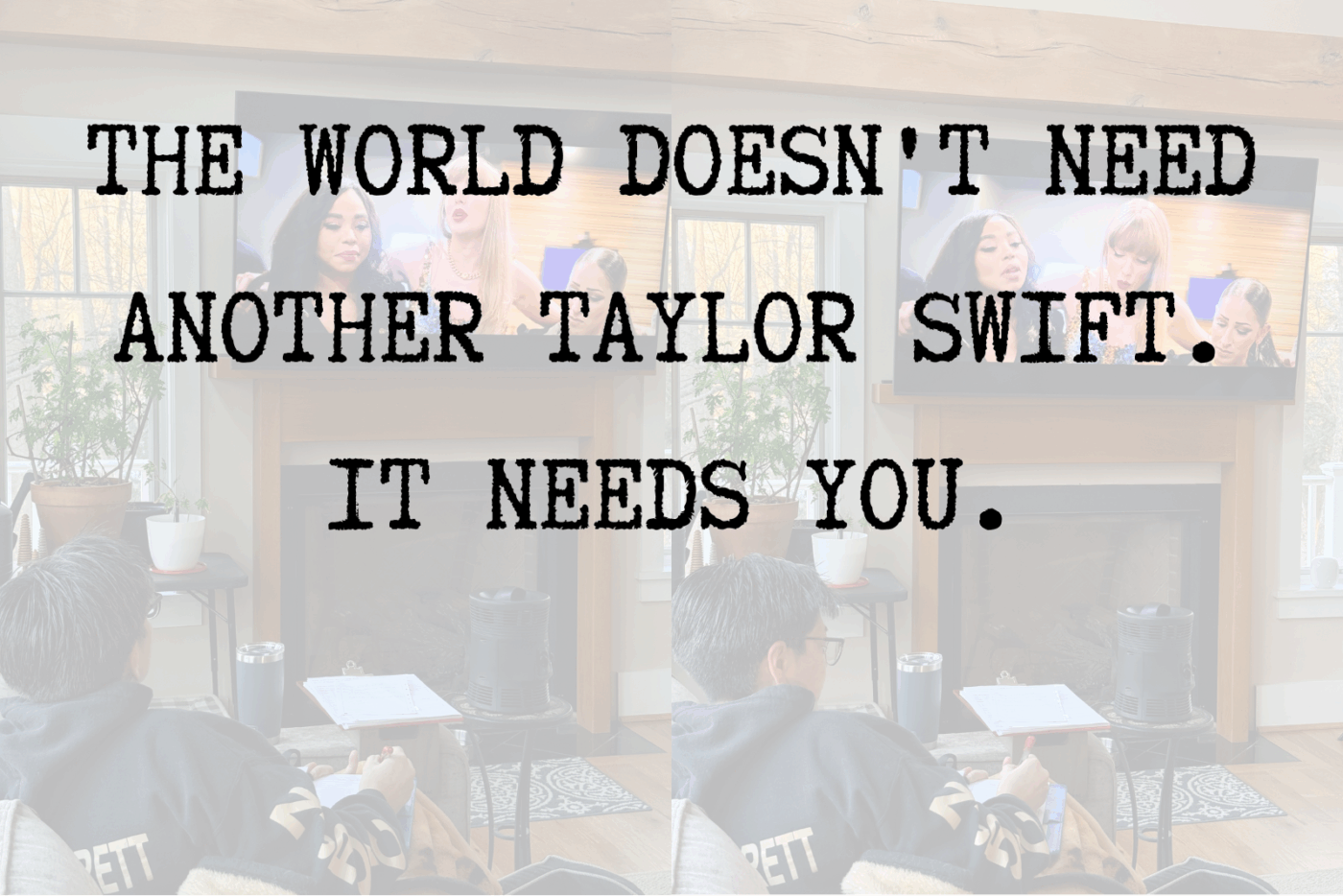
My friend gave me actual homework: Watch the doc. Write down five things that inspire me. Then write down why each one triggers me from a comparison trap mindset. Then write a blog about it.
(Thanks, Amy. Really appreciate the emotional excavation assignment.)
So I watched Episode 1. Took notes. And now I'm sitting here trying to figure out if what I'm feeling is jealousy, aspiration or just the particular kind of frustration that comes from wanting the impact she has without the scale she operates at.
Spoiler: it's all three.
Here's what I wrote down while watching:
1. She overrode the advice of 85-90% of people who told her she couldn't do something.
Even trusted advisors. She just… decided they were wrong and she was right. And she was.
Why it triggers me: I sometimes still listen to the 85-90%. Still second-guessing. Still running every idea through the filter of "but what if they're right and I'm delusional?"
2. She talks about opening doors, kicking down doors, prying windows open.
It's not that pieces fall into place. It's all the micro-decisions of pushing and pushing until everything clicks together.
Why it triggers me: I'm exhausted just thinking about it. How much more pushing? How many more doors? I've been pushing for years and some days, I'm not even sure which direction I'm pushing anymore.
3. Her pandemic home studio was moving blankets and cats wrestling on the bed.
She created folklore and evermore - critically acclaimed, Grammy-winning albums - with DIY sound dampening and feline interference.
Why it triggers me: Even her makeshift is better than my best. Even her "roughing it" produced masterpieces. What's my excuse (aside from 3 French bulldogs alternating between wrestling and humping)?
4. Her goal is to over-serve her fans.
Not just serve them. Over-serve them. She wants to make the world go away for a little while. She knows she's affecting lives. The whole crew knows the connection they create is more profound than just people coming to hear music.
Why it triggers me: This is what I want. Exactly this. To create that level of connection, that depth of impact, that sense of "the world went away for a bit and I remembered why I'm here." I want that so badly I can taste it. And I'm not creating it at her scale. Not even close.
5. She's intentional about everything.
Her set. Song order. How she sings them. Who she sings them with. What she wears. Every choice serves the experience she's creating.
Why it triggers me: I'm intentional too. I sweat every word, every story, every talk. But my 300-person audience doesn't generate the same energy as her 70,000. Does intentionality even matter if the scale isn't there?
Here's what I'm really struggling with:
I want the impact Taylor Swift has - the positivity, the community-creation, the sense that I'm making the world go away for people who need a break. I want to matter at that level.
But I'm speaking to corporate audiences of 30-350 people. I'm writing blogs that get a handful of reads, not millions. I'm creating content that helps people lead better, communicate better, show up better, but I'm doing it in conference rooms and LinkedIn posts, not stadiums and streaming platforms.
And sometimes that feels like I'm playing dress-up in the minor leagues while the real game happens somewhere else.
Social comparison to people "above" you can either motivate or demoralize. The difference? Whether you see the path as achievable.
When the gap feels insurmountable, comparison doesn't inspire. It just highlights everything you're not.
And right now? The gap feels pretty damn insurmountable.
But here's what I'm sitting with after watching that documentary:
Taylor Swift isn't just talented. She's not just lucky. She's relentless. She's strategic. She's been at this for 20 years. She's made art that connected, then made more art, then made more art, then refused to stop making art even when the entire internet tried to take her down.
She built that impact one song, one album, one tour at a time.
And she started somewhere too. She wasn't selling out stadiums at 16. She was playing small venues and getting rejected by every major label in Nashville.
The scale came later. The impact started earlier.
There's this concept called "1,000 True Fans." You don't need millions of people to sustain a creative career. You need 1,000 people whose lives you genuinely change, who will support your work because it matters to them.
I'm working toward that. I'm not at 1,000 yet, but I have people who tell me my stories changed how they lead, how they communicate, how they show up for their teams. People who've carried something I said into hard conversations and come out better on the other side.
That's impact. It's not stadium-scale impact. But it's real.
And maybe the question isn't "Why don't I have what Taylor Swift has?"
Maybe the question is "What do I have that's mine to give, and am I giving it fully?"
I don't have Taylor Swift's reach. I probably never will.
But I have my stories. I have 30 years of military leadership, caregiving, crisis management and finding humor in impossible situations. I have the ability to make a corporate audience laugh and cry in the same keynote. I have this weird knack for taking complex leadership concepts and making them stick through personal stories that people remember years later. Having phrases like "Pull your head out," "Fight for Centerline,” “Full Stop” and "Suck, squeeze, bang, blow" helps.
Those are mine.
Taylor Swift creates community at scale. She makes 70,000 people feel seen.
I aim to create connection at depth. I make 70 people feel understood.
Different games. Different gifts. Both matter.
The comparison trap wants me to believe that if I'm not operating at Taylor Swift's level, I'm not operating at all. That if I'm not filling stadiums, I'm not making a difference. That if I'm not going viral, I'm invisible.
But that's not true.
The people in those conference rooms, the ones who come up after and say "I needed to hear that today," they're not invisible to me. The readers who email me months later saying they finally had that hard conversation with their team because of something I wrote, they're not statistics.
They're people whose lives got a little better because I showed up and did my work.
And that's not nothing.
So here's what I'm taking from Episode 1 of the Eras Tour documentary:
Taylor Swift taught me that I don't have to choose between being inspired by someone's success and being triggered by the comparison. I can hold both. I can admire what she's built, learn from her relentlessness and intentionality and still honor what I'm building.
Because we're not in competition. We're not even playing the same game.
She's creating community at scale. I'm creating connection at depth.
Both are needed. Both are hard as hell.
And if you're reading this and feeling that same comparison trap, that sense that someone else is doing it better, bigger, more successfully, here's where I land:
You have something to give that no one else has. Your stories, your perspective, your way of connecting - those are yours. And someone needs exactly what you have to offer, exactly how you offer it.
Not Taylor Swift's version. Yours.
So watch the documentary if you want. Get inspired. Get triggered. Get both.
Then get back to your work.
Because the world doesn't need another Taylor Swift.
It needs you.